Here I am again, back to talk about games that I cherish dearly, and this time I’m going to be looking at one of my personal obsessions : Stardew Valley. This title is an indie farming simulator, released in 2016) and created by the one and only Eric “ConcernedApe” Barone (“one and only”, because he designed the game by himself, working alone for a long, long time). Stardew Valley takes place in the eponymous valley of Stardew, in a small village called Pelican Town; along your many ventures, you’ll meet colourful characters and get to experience many fascinating gimmicks and crafts and tricks. As a tribute to bigger franchises such as Harvest Moon or Animal Crossing, it is another down-to-earth title that relies upon simple mechanics and a soothing gameplay. Stardew Valley is a versatile and dense game, full of Easter eggs and brilliant details and panache, even if it doesn’t seem like it at first. But what is it that makes it so addictive and charming ? Why has a 2D, 8-bit game gained such a following, with such a simple concept ?
Your introduction into the world of Stardew Valley is a bit of a bumpy ride, to say the least. Your grandfather just died, and left you his farm in his will. As a desperate last attempt to find peace in your life, you abandon your city life and move to Pelican Town, where you find a derelict building on a plot of land that looks like a landfill: your new home awaits. Apart from that, it doesn’t give you any information at first, as it is quite avaricious in tutorials; you’ll have to figure things out for yourself (rest assured, this game is fairly easy to grasp, even if there are a lot of things to dive into). A few days after the beginning, a choice is presented to you, a decision that will influence the whole town, down to the way you play the game. In the middle of the village, you’ll find a “community center”, whose future is uncertain, to say the least. The local JojaMart (a rather evil-looking version of Amazon) wants to buy it off to transform it into a warehouse, whereas the mayor of the village, Lewis, is reluctant; he fondly remembers the times where it was full of life and cheer. It’s up to you whether to sell it to Joja, or to save it by completing “bundles” full of produce and miscellaneous items you’ll come across over your play-through; choosing either way unlocks the same perks for your farm. From there, the aim of the game is what you make of it, whether you want to expand your farm, dive into the local mines for minerals or focus on the villagers, your new neighbours. It quickly sucks you into a routine, and a comfortable one at that, a slice of life untainted by the stress of office work, where the only thing that can go wrong is inadvertently blowing up a whole field (in the event this happens, you can always start your day from the top). In its predictable unpredictability, Stardew Valley offers more than a farming experience, punctuated by the cycle of seasons, each one more pretty than the last one. It takes you on an adventure, exploring mines full to the brim with monsters and treasure, giving a player a whopping amount of content to explore, even after more than a hundred hours. The multiplayer modes, the regular updates, the sweet tunes and the already gigantic number of crops and animals and facilities you can choose to develop or not offers a hell of a ride for anyone who chooses to invest in this (relatively cheap!) game.
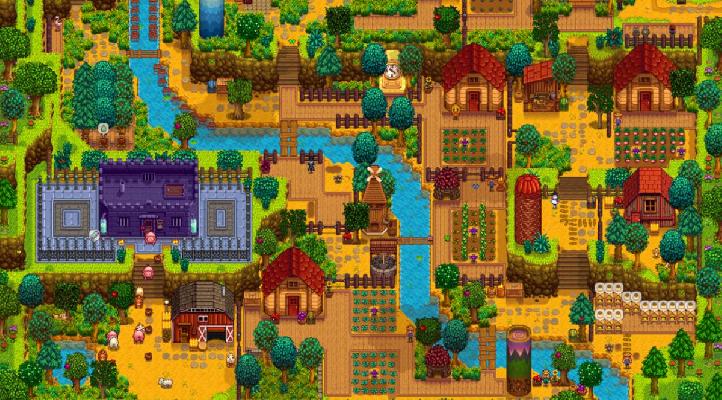
You could think that Stardew Valley is just a good old farming simulator, and it is. However, it has the added value of injecting life into the fleshed-out characters that dwell in this valley. Every single villager of Pelican Town is a well written and three-dimensional person, with quirks and flaws and endearing personalities (for some). You’ll find yourself enjoying conversation with the bachelors and bachelorettes, or exchanging banter with Gus, the village barman. Some characters, like Pierre, the local shop owner or the mayor Lewis are just very much unlikeable (at least, in my opinion); the former will sell your produce and take the credit, whilst the latter does, let’s say, questionable things with public funding (purple underpants and golden statues, really, Lewis??!). They all have a past, a history of some sorts, as well as projects, wants and needs. They aren’t just simple merchants on your way to the mines, or cardboards cutouts with interchangeable identities. Getting to know them takes time and patience, and feels relatively organic. They are flawed people, sometimes vain, sometimes brave, and ConcernedApe doesn’t shy away from tragedy and tough themes. To name a few, Shane is a suicidal alcoholic who recovers over time, Kent returns from a mysterious war front with PTSD and a LOT of issues, Penny and her mother Pam live in a trailer, barely scraping by. However, it’s up to the player to put the pieces together, to find any discrepancies in what’s presented as a universal truth, or even to choose who to woo, to marry, or to dislike vividly (because you will end up loathing some people). Set against a rich background full of seemingly endless quests, Stardew Valley shows you that farming is neither lonely nor boring. Other than collecting everything for the community center bundles, you’ll meet mysterious characters such as Mister Qi, always sending you out on impossible tasks, and you’ll get to explore sandy deserts and hostile islands in the middle of nowhere. Everything is just waiting to be discovered, brimming with secrets and events that set a pace through the year and the seasons, giving the illusion of time passing. Stardew Valley keeps you on your toes, letting you enjoy the joyful eccentricities that go on around Pelican Town.
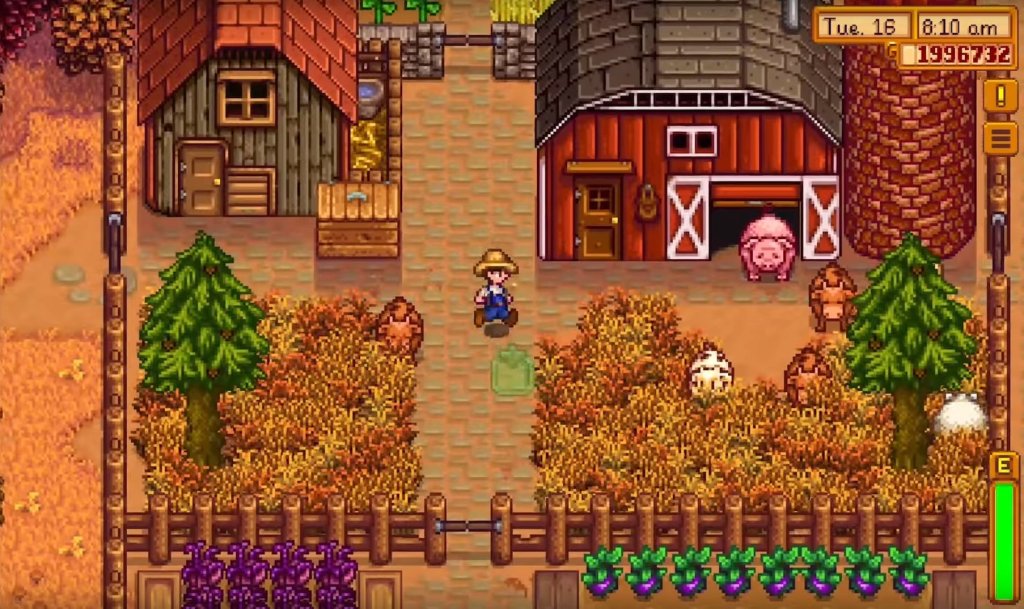
But what takes this game to the next level, in my opinion, is what it implies, underneath all the funky elements and people. Stardew Valley isn’t your plain, run-of-the-mill farming simulator; it’s a breath of fresh air. It plays into the fantasy of starting over from the beginning, of having a new life, leaving behind an obsolete, and quite frankly depressing, one. The opening cutscene of the game shows your avatar sitting behind a grey desk, staring with empty eyes at a dull screen, barely existing in a neo-capitalistic world controlled by Joja. Stardew Valley speaks to the part of us that wants a renewed sense of self, a new and simpler, quieter existence away from the hustle and bustle of the city and its time crunches, far from soul-sucking office jobs and coworkers. As an ex-employee, fighting the imperialistic and beastly corporation that Joja is hinted at is highly encouraged, as well as helping a community to thrive without the “help” of massive companies. Through clearing the farm grounds, unlocking resources and exclusive areas, you learn patience and how to plan for redundancy. This game is about being reborn and starting anew; it gives you a second chance, a new lease on life, continuing its cruel but beautiful cycle. Where your grandfather died, you have the chance to watch tens of crops grow from nothing, to build a new house for you family, bigger than you could ever afford before, to find a place where you belong, where you have peace of mind. And the influence this game has doesn’t stop at the virtual realm. After a brief perusal of online forums and subreddits concerning Stardew Valley, I found them overflowing with stories of gamers who, inspired by the rural life of their virtual avatars, turned to gardening, and sometimes even farming, snapping out of a previously dull existence. Stardew Valley’s impact is more than just a video game; it takes you on a ride, gently guiding you to a more tranquil state of mind.
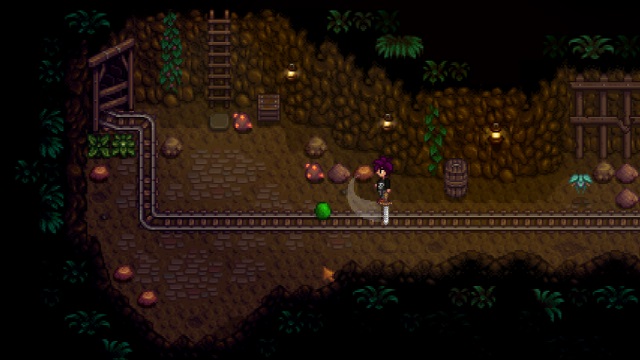
All this to say that Stardew Valley really is one of my favourite games. With its quirky characters, charming design and compelling gameplay, it truly is a heartwarming experience. Eric “ConcernedApe” Barone manages to convey his passion and expertise through this project which, despite its humble beginnings, enabled so many people to find solace in the colourful world of Pelican town. I heartily recommend it, for anyone and on any platform, both young and old.


Leave a Reply