(Content warning : this is a quick review. It will spoil quite a lot of The Queen’s Gambit. I recommend you watch the series first or, if you don’t, advance at your own risk.)
Some time ago, I spent the night playing chess with friends. I had forgotten how much I actually enjoy that game. And the more I think about it, I realise that that game has been a part of my life for quite a long time. I’ve constantly entertained the idea that I could get better at it and, little by little, I’m starting to understand how much work goes into being barely adequate. That checkered board is clever and cheeky, even if it’s not one of a kind. Every culture has its own version, whether it be Go, checkers or even Shogi (even if they’re more like distant cousins than actual siblings). In some ways, playing games is one of the most efficient methods to create a bond, friendly or not, between us humans. With cards, boards, and even video game controllers, we create new ways to interact, to laugh, and get frustrated at one another. But chess is a war zone (please excuse my military cliché metaphor, I couldn’t help myself). The contrasting pieces have a special vibe to them, pitting two (or more) players against each other, with the power to tilt a fragile balance at the tip of their (often sweaty) fingers.
But why chess, you may ask ? Why did my friends and I spend so much time drunkenly speeding around that board with mistaken moves drenched in twilight ? Well, I must confess, it’s because of Netflix, more specifically because of one of their recent releases, The Queen’s Gambit. The acclaimed series has become quite the phenomenon, and sparked (dare I say) an overwhelming passion for the game. A lot of people, after seeing this quirky show, have taken up the old-fashion art of chess and its convoluted set of rules. But more on that later. The Queen’s Gambit focuses on Beth Harmon, an orphan and chess prodigy, as she navigates through her harsh life. Played by Anna Taylor-Joy (in a near-exceptional performance), we see her wade through heartbreaks, newfound independence and addictions, honing her critical skills to eventually become Champion of the World. The casting is on point, and the writing is, well, good ! Beth Harmon is an endearing character, but not an infallible one ; she has her own ego, and I did find myself shaking my head at some of her numerous bad choices. But she’s a teenager, and a brilliant one at that, with an excellent taste in fashion. Her enthusiasm is refreshing, and never entirely falls into the realm of stereotypical portrayals of woman characters. Netflix managed to create a show with fully fleshed characters (well, some are deeper than others, let’s leave it at that), without falling into any kind of pathos or pitiful sympathy. The camera angles are sharp and complement the tasteful decors and costumes that successfully immerse us in the USA of the 1960s, punctuated by the latent conflict that was the Cold War. Whilst watching this show, I cried and laughed and wanted to scream with the multiple characters, and, of course, nodded my head to the smashing soundtrack that usually imbues the colourful scenes. But enough about that.
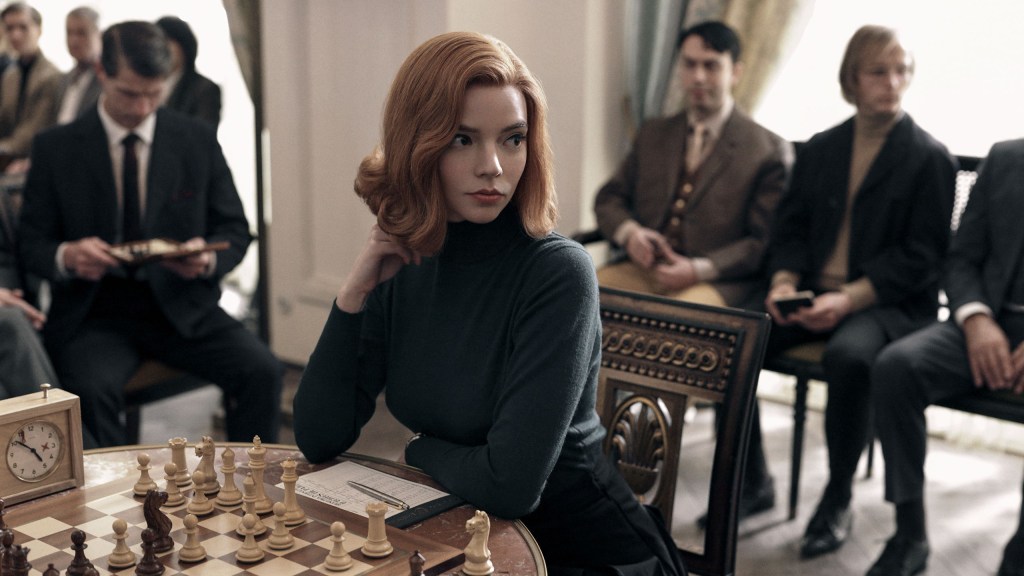
What makes this Queen’s Gambit so great is its way of adding just the right amount of folklore to its scenario. For a long time, i thought chess was a mysterious game that can become boring pretty quickly to the untrained eye. But it has such a rich and dense atmosphere to it that it’s hard to dismiss, and Netflix skilfully managed to channel this. In this original coming-of-age story, one of the first elements of lore we stumble upon is the recurring figure of the child prodigy. From the beginning, you are immediately confronted to Beth’s (kind of) tragic story with her arrival in an orphanage in the middle of rural Kentucky. She’s young, lonely and hopeless, getting fed tranquillisers and various narcotics (it’s no wonder she becomes addicted to them so fast). Fairly quickly, she develops two solid bonds with some of her acquaintances, one with Jolene, an outspoken older girl (that will stick with her through thick and thin until the end), and one with Mr Shaibel, the rugged janitor of the establishment. The latter is essential : he is the one that introduces Beth to chess, in a silent and stoic manner. The redhead girl is, of course, a chess prodigy. She’s seen easily beating local chess clubs, playing against multiple opponents at the same time, a piece of cake despite her very young age. Her ego will inflate greatly until her first resounding defeat against Benny Watts, a quirky American champion with a weird cowboy hat.
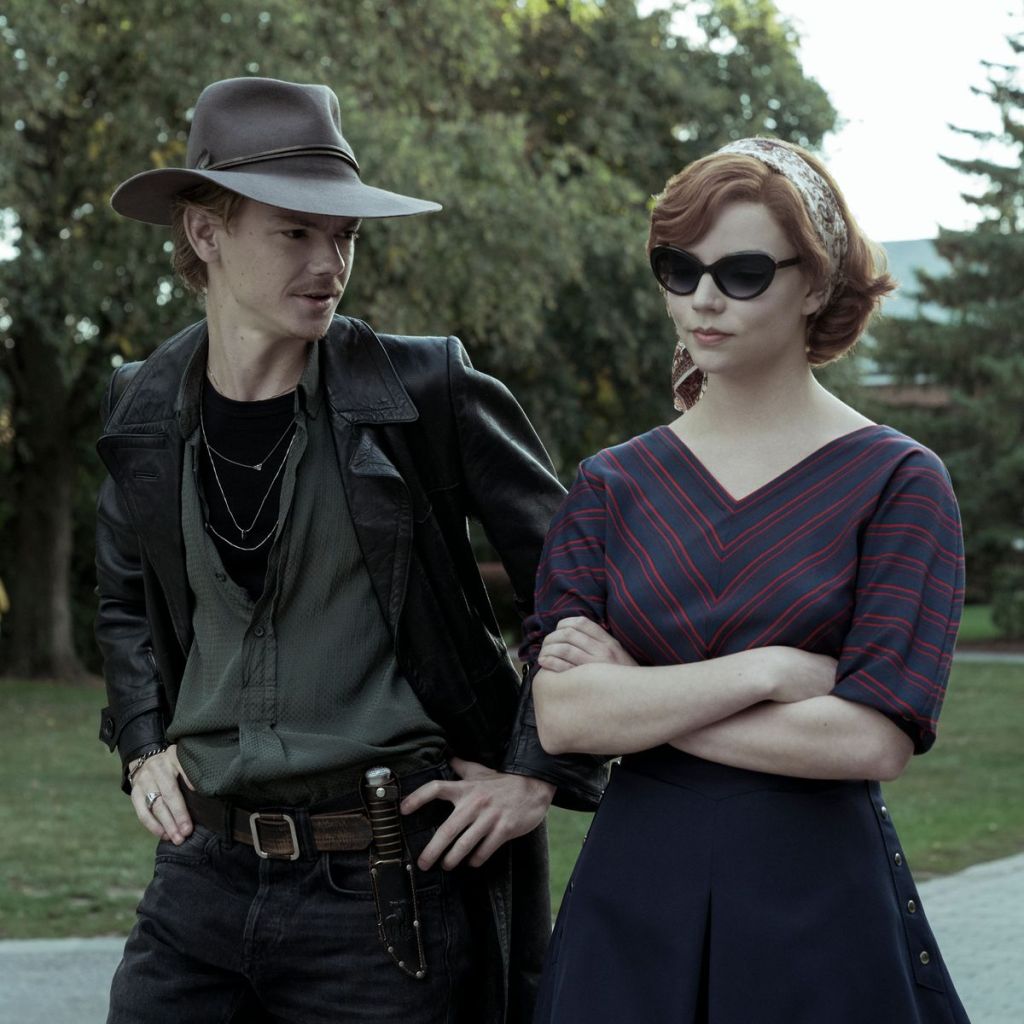
Even her adoptive mother, Alma Wheatley, won’t be able to calm her down (it is worth saying that she reluctantly gives young Beth alcohol, speeding up the dependency cycle). This stereotype of the narcissistic prodigy is then softened, just a touch, by Beth’s crushing love for Townes, another player. However, even if it’s isn’t mentioned openly, it’s unrequited and doomed : this Townes is unattainable, and, more importantly gay. Beth won’t see the man again until the very end of the series, once she understands that it was never meant to be, and learns to cherish their friendship. It is only once she makes peace with her feelings for him, and lets go of her resentment towards him, that she feels confident in her abilities again. And, last but not least, I have to mention the underlying subtext of hidden conflict that only openly shines on the chess board. Beth’s nemesis is Vasily Borgov, a Russian player and a ruthless world champion, during a tense period of the Cold War. The implied existence of espionage is always looming, and plays into the delightful reminder that spies always play chess. Harmon plays Borgov three times, the second time of which left me highly intrigued. In a glamorous Paris, she enters a European tournament with the help of Benny’s coaching and detox (he explicitly forbids her to drink, as that would take her into relapse from her growing alcoholism and severely impact her game). On the eve of her match against Borgov, she meets up (supposedly out of nowhere) with Cleo, a French model, who manages to pressure her into drinking and partying. This character is introduced only a few moments beforehand, and will not appear again, as if she disappeared as soon as she got what she wanted. After spending the night with the model, Beth is heavily hungover and late for her chess match, which leads to her defeat and to self-hatred (which will only be resolved in the climax of the series, the third and last game against the Russian champion). But was Cleo a spy, sent by the USSR to corrupt Beth’s playing ? That’s my personal theory, that some others might dispute viciously.
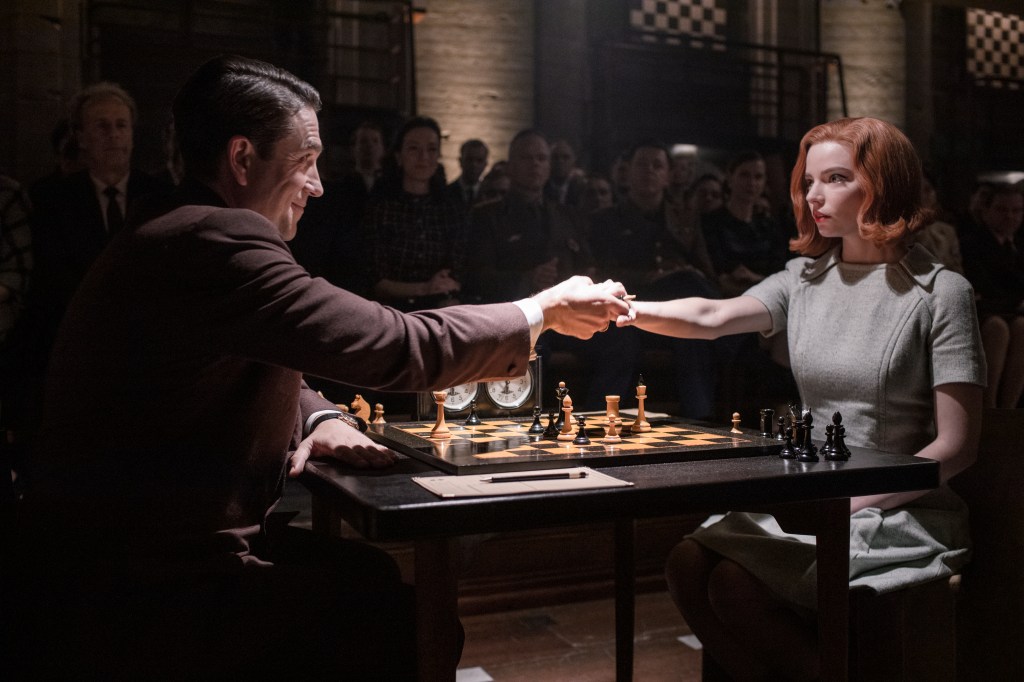
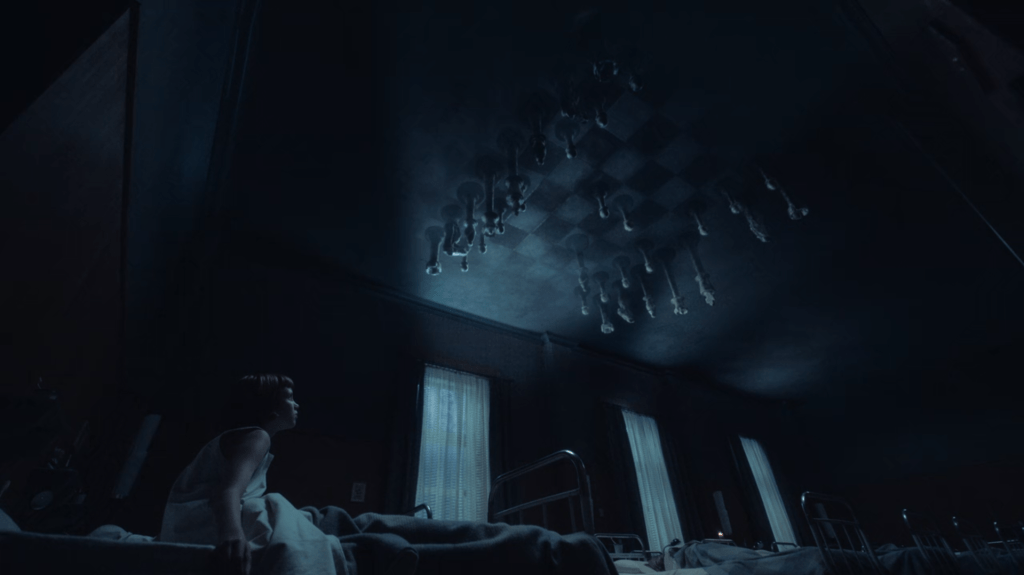
But getting into chess, whether as an amateur or a competitor, isn’t a simple feat, as shown (in a mostly elegant way) by The Queen’s Gambit. First of all, the rules are very much not instinctive. And once you understand how to play, a whole realm of dizzying possibilities open up. Even the first move could mean defeat or victory ! Beth gets the hand of it quite quickly, but grumbles as soon as she realises that she needs to buckle down and work instead of only relying on her talent. She spends her nights in a hallucinative state (induced by drugs and alcohol) going over every game she plays on an illusionary upside-down board stuck to her ceiling. We never really know what this board actually means as she gets older. Beth is more and more obsessed with the game, and nearly goes insane. The sheer amount of different paths each move can take you to makes my head turn in a whirlwind of opportunities too, to be honest. The mention of a potential Sicilian Défense or King’s Gambit sounds like a completely different language to me. Another hardship brought up by Beth in The Queen’s Gambit is how opaque the world of chess actually is. As a woman, she is constantly underestimated, mocked, and even disdained by her (predominantly) male opponents. She has to defend herself at every step she takes, no matter how brilliantly she plays. It’s only when she arrives in Russia that her brio is recognised, as she’s swarmed with women eagerly waiting for her autograph. Chess seems like an austere world, still deeply rooted in sexism. And this series shows this, with more or less subtlety at times.
In the end, chess is about strategy, this much I know. And how we play it, i think, can probably say something about each of us. Harmon is an aggressive player, not scared of attacking her opponent from the start. As Borgov says when he first meets her, she’s a tough rival but also a bold and stubborn individual, establishing a link between her way of playing and her rough upbringing. She was abandoned by both her biological and adoptive fathers, and both her biological and adoptive mothers died in front of her. She’s had to fend for herself all her life, and only ever falls apart in presence of Jolene, if not alone. She spirals through trauma, addiction and self loathing, twisting deeper and deeper as her chess skills grow. Her confidence shakes every time she is even remotely challenged, like a child forced to grow up too fast. And it feels as though Beth’s growth is mirrored through her multiple games. Chess isn’t straightforward at all, as much as we’d like it to be. It’s bitter, and usually ends in failure, at least for me. Funny how the French call this game “échecs”, or “failures”, huh ? It adds a whole new dimension to the game, a bitter sweetness that can dishearten the most motivated players. Chess brings out something in each of us, whether it be good or bad, frustration and boredom or glee and cockiness. We can’t hide behind the checkered board. That’s what I believe anyways. Some see it more like a thought experiment, an exercise, and it is, to a certain extent. I tend to play far too brashly, sending my pieces to the battlefield with far too much recklessness. I sacrifice pieces for strategies that only rarely work, and silently shrug it off as beginner’s hastiness, even if I’ve been playing for quite a long time. I never fully learned the game, though, so I am an amateur at best ; I just try my best in hopes of someday beating my whole family at it. I wonder what that says about me.

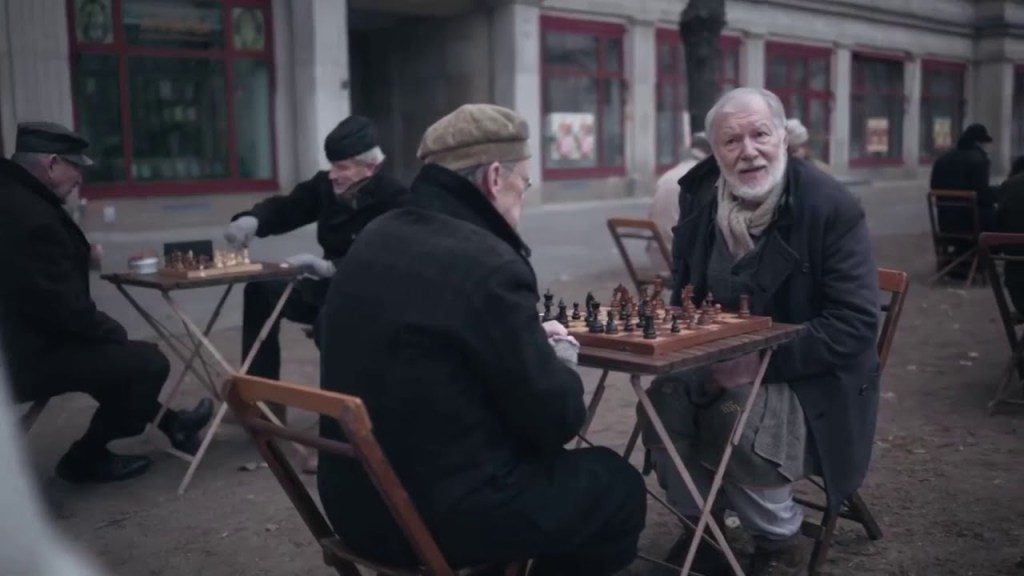
All this to say that The Queen’s Gambit is certainly binge-worthy. I recommend taking your time with it though ; it has got a lot to offer, and deserves to be savoured. The effect it had on its spectators, however, is amusing to me. I mean, there is a growing dent in chess board stocks, at least around here. Funny how a Netflix show can have that range, isn’t it ? We are bombarded with easily accessible entertainment, and its quality varies. When a good series like this one shakes me up like it did, it tends to stick with me, making itself at home in my mind. And in a way, all the ingredients were already there : I’ve always been haunted by these sorts of games, and The Queen’s Gambit scratched an itch. At the end of the last episode, we are left to wonder, though : Beth will probably keep playing chess but how, and where ? Will she follow in the steps of Mister Shaibel, her old mentor, or will she stay in the spotlight as long as possible ? So many questions are left unanswered, and honestly, I like the mystery. I can nearly picture myself in this ending, amongst the old people Harmon eventually strolls through. The new chess world champion goes on to challenge the crowd that’s still trying to arrange their pieces in a way that feels good, a cheeky grin on their faces, with not a care in the world. Wouldn’t that be nice ?
(All credit for the pictures goes to Netflix, 2020)


 background character
Leave a reply to John Williams Cancel reply