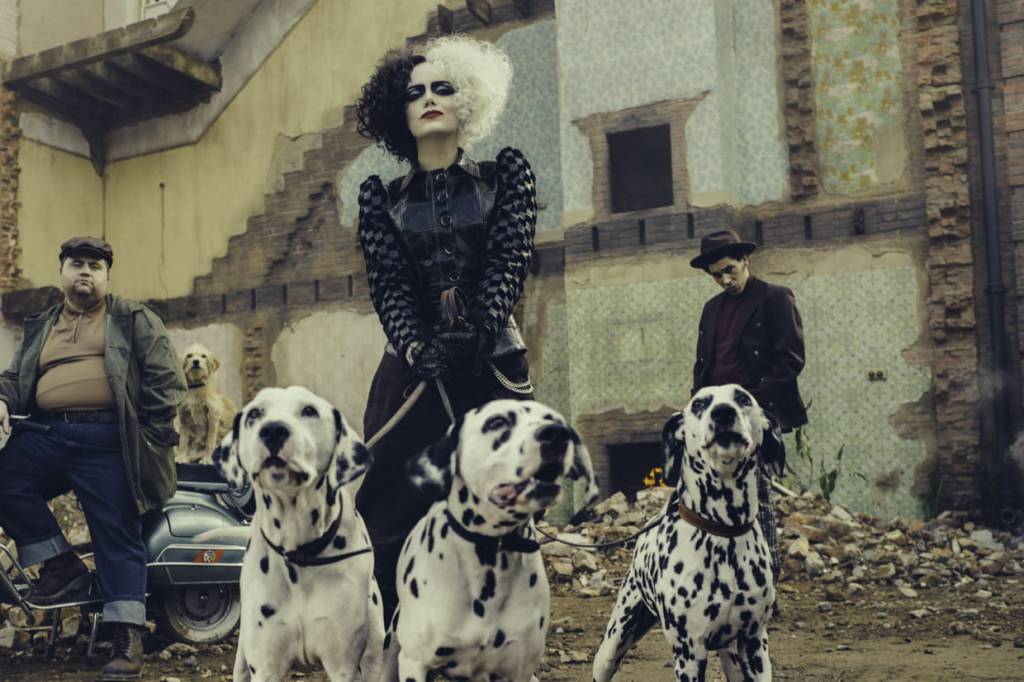
(Content warning : this is a quick review. It will spoil quite a lot of Cruella. I recommend you watch the movie first or, if you don’t, advance at your own risk.)
I went to see Cruella (2021) at the cinema last week, and let me tell you, it was an experience. I hadn’t been to the movies in what felt like years (probably since February 2020), and finding myself in a dark room, sitting in nearly comfortable chairs in front of a massive screen was nothing short of a relief. I’m not the biggest Disney fan ever, so I was a bit wary as I sat down; I had heard a lot of positive stuff about what I was going to watch, but a lot of negative feedback too. Maybe I wasn’t as open-minded and objective as I should’ve been. However, I left that theatre pleasantly surprised, having actually thoroughly enjoyed Cruella. Me ? Not annoyed at what seemed to me a vague attempt at a fashion film acting as a prequel to 101 Dalmatians ? It’s more likely than you think. So in this quick review (which will sound more like a rant in some places, I admit), I’ll break down what I liked and disliked (because there are a few things that still irk me today) about this somewhat controversial movie.
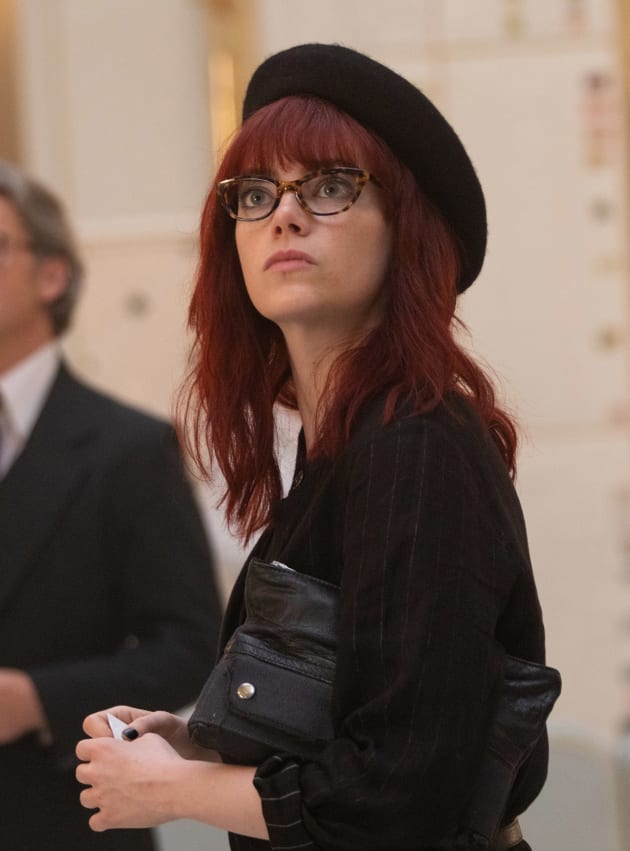
I will preface this by saying that I don’t think I’ve ever seen 101 Dalmatians in its entirety or, if so, I don’t remember. I have a loose understanding of the 1961 plot, though: Roger and Anita Darling suddenly have a LOT of dogs (101 seems like a fair amount), and Cruella (the antagonist in this case) wants to dognap them in order to make herself a coat out of their fur. Quite gruesome premises for a lighthearted movie, if you ask me. But Cruella was completely different. Set in a punk-ish 1970s London, this inverted coming-of-age story follows Estella/Cruella’s life (the main protagonist, played by Emma Stone) as she tries to make it in the world of fashion, being a poor and destitute orphan reminiscent of a Dickensian novel. She has a double personality and, as the plot goes on, it’s hard to say who is whose alter ego: Estella is a kind, introverted person, whereas Cruella is a cold-hearted and unlawful character, fuelled by anger and hatred. Estella/Cruella is helped by a handful of other colourful characters such as Jasper and Horace (played respectively by Joel Fry and Paul Walter Hauser), two thieves that quickly become her family, Artie (John McCrea), the owner of a thrift shop and a talented designer, Anita Darling (Kirby Howell-Baptiste), an old childhood friend turned journalist, and even Buddy and Wink, two charming dogs. Together, they fight back against the Baroness von Hellman’s (the main antagonist, played by Emma Thompson) rigid ideas and questionable methods (under which Estella/Cruella works), giving Cruella a chance to shine as she creates more underground pieces. The aesthetics Cruella showcases are precise and vivid, the actors and the costumes are made to measure for each role. Even the soundtrack is absolutely iconic, ranging from soul to rock’n’roll to mellower tunes, and the end credits song “Call me Cruella” is performed by of Florence + the Machine. One specific scene caught my eye, condensing : as Cruella’s antics become more and more flamboyant, the Baroness steals an idea from one of Estella’s personal notebooks, a dress involving a myriad of shimmering pearls. As the day of the big reveal approaches, the dress is locked tight in a safe. But when Cruella inevitably appears, the Baroness opens the said safe, and a cloud of insects comes out of it: the pearls, painstakingly hand sown by Estella, were moth cocoons waiting to hatch and to devour any bit of fabric they could put their mandibles on. This is why Cruella, a jubilant display of wits, feels like a fun and thrilling British counterpart to The Devil Wears Prada. On one hand, the Baroness’ awful temper and wretched manners, as well as her talent and strict requirements, seem to mimic Meryl Streep’s Miranda Priestley, in a more excessive manner. On the other hand, Cruella would be an Anne Hathaway who snapped, full of insatiable ideas and a thirst for conquest. Overall, Cruella is a tongue-in-cheek and overly dramatic movie, full of bold fashion concepts and interesting statements and, for a brief moment, as I sat at the edge of my seat, punk was alive and well (which is kind of ironic, coming from a Disney movie, but more on that later). It’s a real feast for the eyes and the soul, bonkers and messy and trashy in all the right places.
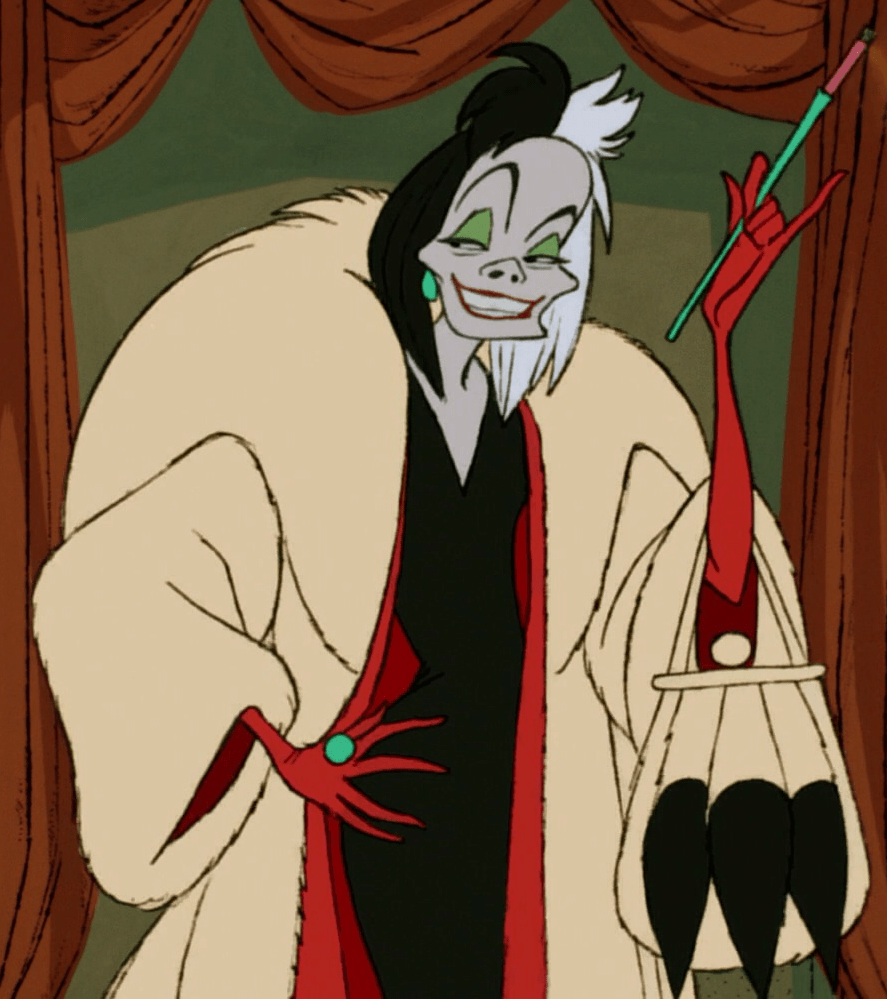
Unfortunately, it’s messy in all the wrong places too, and sometimes it falls quite short of the mark. The plot, in particular, is thin at best, even for a Disney movie, and tries to turn one of the most ruthless villains ever into a likeable and tenacious character. At the beginning of the film, Estella/Cruella’s mother dies, pushed over a cliff by three very aggressive Dalmatians. Even if it’s a relevant plot point for the following storyline, it felt like a vague attempt at empathy, to me. Since Cruella, in the original movie, wants to skin the spotted puppies, having her mother get killed by those same dogs is an awkward and clumsy feature, and rubs me the wrong way. The few other references to 101 Dalmatians aren’t any better. Roger and Anita Darling are barely mentioned secondary characters, like afterthoughts that weren’t really required, as they aren’t essential to the plot. For these reasons (amongst others), Cruella probably shouldn’t be considered as a prequel at all; and she’s nice to the dogs she comes across, which feels completely inconsistent with her previous interpretations. It would’ve worked so much better had it been written as a completely original story, and not like a reference to another Disney classical franchise; in its rework of 101 Dalmatians, it feels lazy and out of character and loses meaning in its faint grasps at a more canonical story. Another point that left me a tad disappointed was the whole issue this movie has with mothers and their different faces. As the movie goes on, it becomes clear that the dreaded Baroness is Cruella’s true mother, and not Catherine, the gentle woman who died in the beginning. In fact, there are two mothers for the two facets of the main character: Catherine the kind for Estella the sweet, and the Baroness von Hellman for Cruella the horrid. No fathers are to be seen, of course, even if the Baron von Hellman (nothing to do with the mayonnaise, of course) plays an important part in the plot, as if, even through death, only her dad can save her (which is a whole other kettle of fish, if you ask me: why are men always at the center of attention, I wonder). Moreover, Cruella draws genetical conclusions I find sort of chilling: talent, as well as cruelty, are passed down from mother to daughter, without any other explanation. Cruella cannot escape her faith, she is bound to it ever since she was conceived, and can’t become anything more than the Baroness’ milder avatar, maybe a bit more talented. At the end of the day, Cruella plays on the same old stories, depicting mothers as either lovable, ethereal, dead angels, or horrible, appalling and terrifying devils that are the most important to the protagonist. By perpetuating these clichés, this movie shows (maybe unwittingly) how hard it is to get away from toxic tropes and warped stereotypes. Talent, as well as personality, shouldn’t be considered as hereditary; there are no “bad genes” (those attributed to “Cruella” and not “Estella”) to be expelled and hidden from the world. We are what we make of ourselves, and our upbringing is deeply etched in us, whether you like it or not. Estella/Cruella is a talented designer because she worked for it, unrelenting and never losing hope, and not because her mother herself (who had nothing to do with her before the ending, might I add) was a good designer.
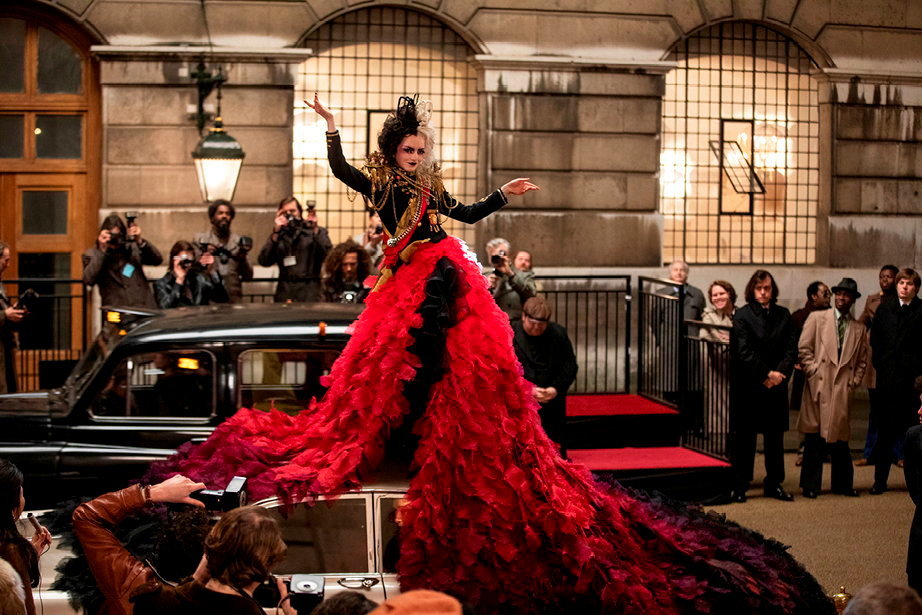
Lastly (but certainly not least), there are a few “political” (I am putting this word in brackets because even if it’s not that deep, it’s the 21st century, and a Disney movie of this scale won’t be exempt of any social discourses) undertones I’d like to address (I couldn’t help myself, I know). I mentioned earlier the irony latent in the fact that Disney, a capitalistic model of a company, produced a movie that feels like an attempt at reviving punk; it’s not lost on me. I do, however, appreciate the fact that Estella/Cruella isn’t born into riches (well, at the beginning of the movie at least, before we learn that she’s the heiress to a massive estate). She is poor and alone, not a rich kid who, on a whim, decides to “get into fashion”. But it pales in comparison to the fact that the cast of Cruella is a not-so-diverse one (and I doubt that it’s an unintentional commentary on the poor diversity of the fashion industry): Anita Darling is the only Black character in a pool of people who are meant to be from London, a melting pot of nationalities and people in itself. Another thing that bugged me are the feminist connotations, which are laughable at best. “I am woman, hear me roar” is an actual line said by Cruella (who, again, is meant to skin puppies for a living), and is the worst idea I’ve seen in a long time. It’s unsettling that the plot and the characters assimilate “feminist” ideals whilst washing them down, diluting them to such extent that it feels mocking at some points. Also, why do feminist characters, who identify as such, always have to be represented as violent and angry and unhinged women hell-bent on revenge ? Cruella starts off as a little girl angry with the world, and ends up as a wacky woman angry with her mother, in a movie focused on women in a world full of men. Cruella is yet another story that pits minorities against themselves, a rhetoric I’m finding more and more tiring the more I see it. Lastly, the LGBTQ+ references are neglected, too, even if quite a bit of fashion is notoriously queer-led. There are a few hints at gay characters, sure, but they aren’t confirmed, only to be left lying in a sort of cliché grey area where one can only speculate. Artie is one of them, but is turned into a glorified glam-rock sweatshop for Cruella by the plot. Another one would be Jeffrey, the Baroness’ assistant, barely named throughout the movie. He’s automatically affiliated to “feminine” mannerisms, in particular through his high-pitched screams, as he sees bugs and other critters for example (of course, this plays into very gendered clichés). Another attempt at queer discourse would be when Horace, one of Cruella’s henchmen, puts on a dress to blend in with a crowd of ladies. Putting a man in a dress and passing it off as comedy, in 2021, is an old-fashioned jab at unfunny topics. Disney tries to hit and misses awfully, engaging in a history of violent clichés and oddities. But maybe I’m bitter and, as I said, it’s probably not that deep.
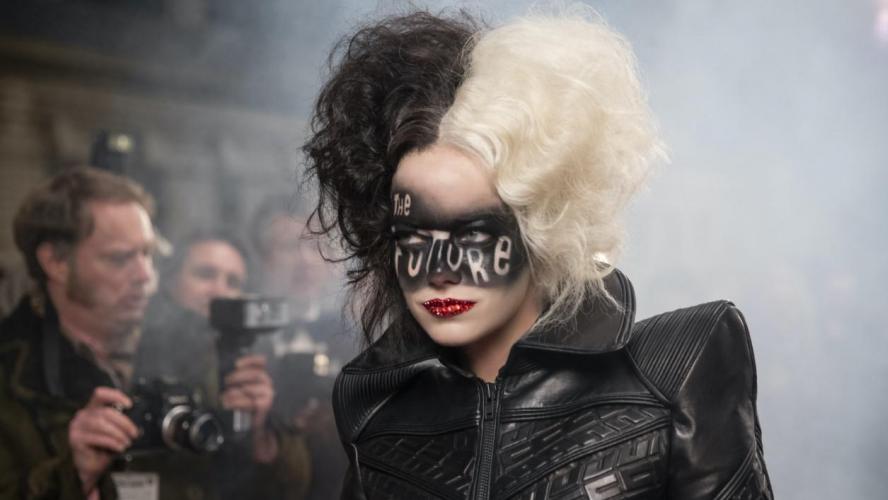
These few bits and pieces don’t turn away from the fact that Cruella still is a fundamentally good movie, even if it has a few hiccups. And it was a good way to come back into theatres after a long period of drought and nothingness, I thought as I breathed through the fabric of my mask. Cruella, through all of its imperfections, is still a nice film to have a good time on a rainy (or sunny) day, and a solid family movie. I’d give it a fairly high score; if you like fashion, good music and exhilarating settings, then this is for you.

 background character
Leave a comment