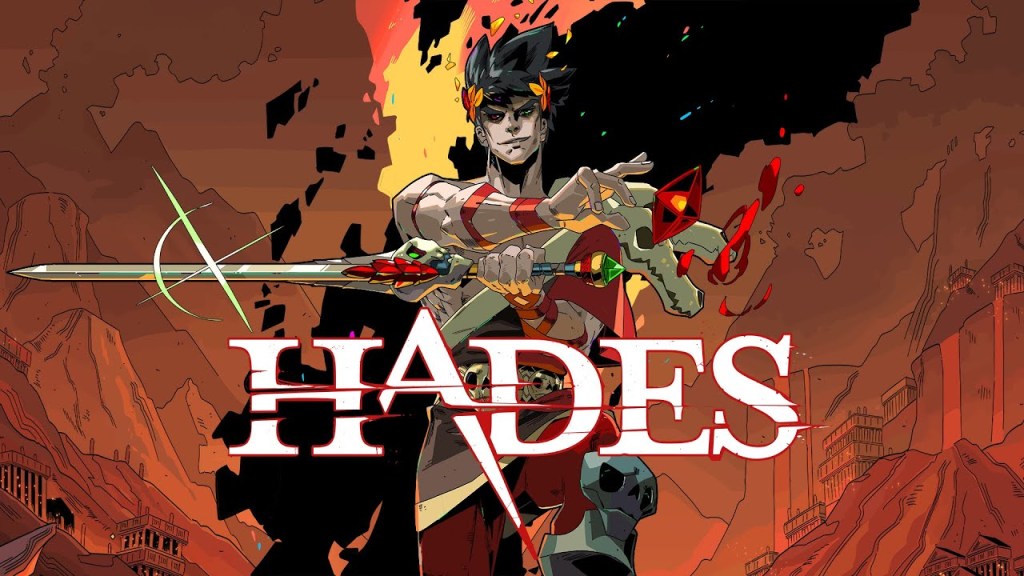
(Content warning : this is a quick review of the video game Hades. It will spoil quite a few things. I recommend you play it first or, if you don’t, advance at your own risk.)
I don’t always pay attention to the different “game of the year” awards going on, but one of 2020’s contenders recently caught my eye. And 2020 was a good year for gaming. Titles such as Animal Crossing : New Horizons made us feel somewhat normal during lockdown, and The Last of Us II brought tears to our eyes as we embarked on this tremendous journey of grief and loss. Some releases relied on nostalgia, whether it be Doom Eternal or the Final Fantasy VII remake, and others, like Ghost of Tsushima, gave us an original outlook on the open-world genre. They were all AAA games, produced by massive companies with a lot of money and employees and time on their hands. And that is why Hades, an indie gem published by Supergiant Games, surprised me, standing proudly amongst its peers. I quickly understood why this game was so appealing and, in a way, beautiful. After playing for more than two minutes, Hades became one of my favourite games ever. It was invigorating to see a smaller game packed with energy and fresh ideas, a killer soundtrack and great gameplay. But why is Hades such a bop, you may ask ? I’ll break it down in this quick review.
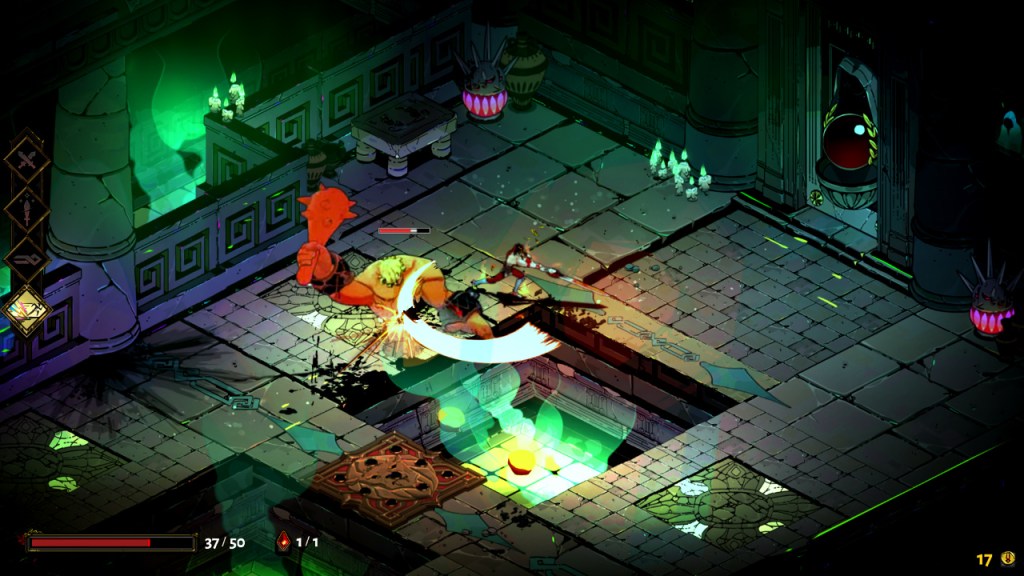
First of all, what is Hades, exactly? In this game, you play as Zagreus (or Zag), one of Hades’ (the god of the dead) children, on his quest to break out of Hell’s multiple levels. There are no limits as to how many tries it takes to escape this frankly hostile and infernal world, which revolves around four major areas : Tartarus, Asphodel, Elysium, and the Temple of Styx. Hades’ gameplay is centred around smashing everything and everyone that gets in your way to smithereens in order to keep moving forward, meaning it belongs to the “roguelike” genre . This version of Hell is a harsh and unforgiving environment, filled with violent and warlike undead creatures that will stop at nothing to keep you from leaving. With each passing level (which are represented by a succession of rooms), the difficulty significantly increases, and victories quickly start feeling like mountains to climb. Of course, dying also means getting better, as it allows you to unlock permanent skills that increase your chances of survival. Now, this could seem ironic : in order to live longer, you have to be able to afford the hefty cost that is your own life. In his quest for freedom, Zagreus is not alone. The game gives you a choice of six different weapons to smash your way out, from a massive sword to a funky pair of gloves. Each weapon has its own advantages and flaws, and it’s up to you to find the one that suits you the best. Along the way, you’ll also be offered various power-ups in the form of “Boons” from other Greek Gods (which are all eagerly awaiting your victory), as well as multiple opportunities to get stronger, with each boss fight or strange encounter. Overall, the alleged repetitiveness of the gameplay is only an excuse to get into it; no two runs will ever be quite the same, as you combine so many choices and opportunities, which is what keeps Hades from becoming redundant or tedious. And if this game starts getting too much to handle (and it will), there is a way to alleviate that toughness, in the form of a “God mode”. It won’t make the game easier, and the monsters won’t be any less ruthless, but it does make Zagreus more resistant to damage. In fact, it works both ways; after reaching a certain point in the story, a specific item, the “Pact of Punishment”, will be unlocked. This allows you to raise the stakes (in order to reap greater rewards, of course) by forcing you to restrict your power-ups, making the whole experience even harder. To put it in a nutshell, Hades’ gameplay is a seemingly endless source of fun and frustrating restarts, that condenses punchy and repeatable game mechanics with a bright and colourful depiction of Hell.
Hades’ gameplay may be great, it wouldn’t be as effective without its impeccable soundtrack, composed by Darren Korb. At first, it’s pretty straightforward. The instruments used, such as the harp or the mandolin, are reminiscent of Ancient Greece, for example. Korb’s score matches every single world Zagreus is confronted to, giving them each its personal flair. The dark and grim tones of Tartarus, for example, clash with the elevating notes of Elysium, which sound refreshing after a fiery stroll around Asphodel’s heated tones. Each piece has its own pace and injects life into an already well fleshed-out world. The melodies never grow redundant either, which is quite a feat, for a game with such a repetitive concept. The music follows Zagreus throughout his journey seamlessly, adapting itself to any situation with the perfect intensity. When he reaches a boss fight (who each have their own theme, might I add), for example, the former calm and somewhat delicate score swells into a full-on metal concert, enhancing the whole experience. It gives me chills; fighting fierce opponents with this kind of soundtrack really gets the adrenaline pumping. Moreover, the score also acts as a narrative device, becoming a truly essential and central mechanic throughout the game. Indeed, during his adventures, Zagreus comes across Orpheus and his muse Eurydice, both mythical artists plucked from Greek mythology. The first time you come across the wood nymph Eurydice, it is deep within the scorching realm of Asphodel, as you get more and more desperate for peace and quiet. In a “bonus stage”, she sings one of the prettiest melodies ever, catching me off guard every time I encounter her : Good Riddance (I do invite you to listen to it, it’s just great). The sorrowful lyrics, mixed in with her melancholic voice, surround Zagreus (and yourself) with a little bittersweetness. This random but welcome break in the intense gameplay acts as a mellow and energising rest. On the other hand, Eurydice’s counterpart, Orpheus, brings tear-jerking sadness and regret to the table with his own lament, adequately named Lament of Orpheus. The poet’s tale is a sad and depressing one, so sad, in fact, he lost his will to live and to sing; Zagreus is the only one that can bring it back. And when Orpheus and Eurydice finally meet (if you wish them to meet, that is), it’s nothing short of breathtaking. The whole game is riddled with musical prowess that can hauntingly captivate you, as it transforms into one of the many characters roaming this version of Hell.
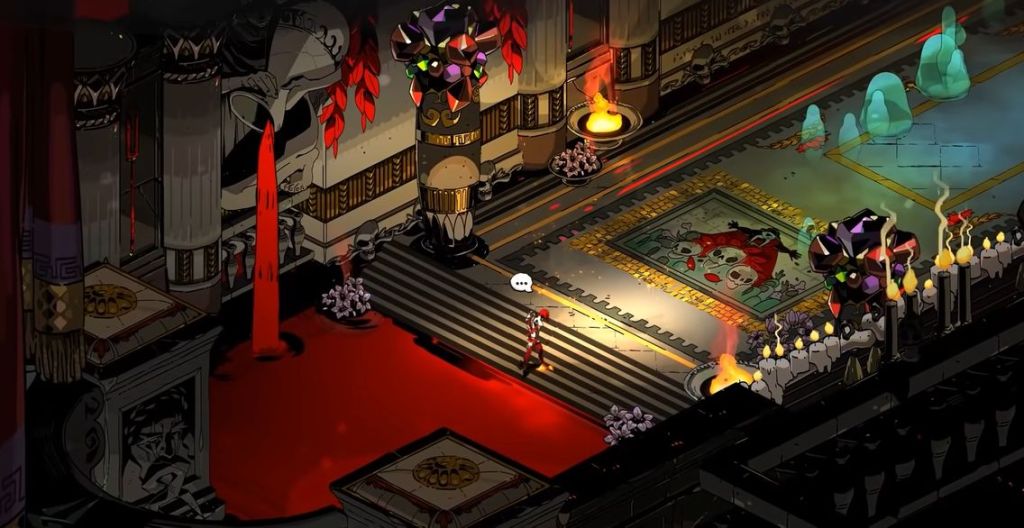
Hades truly shines, in my opinion, through its brilliant storytelling. At first glance, the plot is as simple as can be: Zagreus wants to get out of Tartarus, and everyone is hell-bent on stopping him. Well, not everyone. With every unsuccessful run, he meets new characters who put their (after)life on the line to help him escape, whether it be out of boredom or out of compassion. Every character is worth spending some time with, and deepening your relationships with them adds a new layer to the gameplay. They have depth, motives and an actual personality, as well as GREAT character design. Even Zagreus grows with each attempt, from being an arrogant and kind of snotty protagonist to a more mature and conscious deity, as the mystery shrouding him gets thicker and thicker. Some of the characters are truly tragic, well, as much as death can be (which is actually quite a lot in some cases). From star-crossed lovers separated by bitterness and regret such as Achilles and Patroclus, to pained partners and former friends Thanatos or Megaera, Hades is a mosaic of human interactions (as much as it can be, given, you know, they’re all supernatural creatures). The writing is captivating and organic, and never feels forced. The people of Hell are just trying to do their job, even if that means stopping you; in a way, Hades is an office life simulator, where you cool down around a pint of ambrosia instead of by the coffee machine. The links with mythology are spot-on, too, from Sisyphus rolling his boulder around to Cerberus being a faithful, if not playful, watchdog (who likes snacks just a little bit too much). Some characters are romance-able, such as Megaera and Thanatos. And Hades isn’t shy when it comes to representation; it proudly depicts queer relationship without them morphing into hollow clichés of themselves, which is always delightful to see. Whilst trying to escape, Zagreus leaves behind individuals who truly care about him, no matter how much he tries to ignore it. The voice acting provided also gives you an insight into what this world would feel like, as you keep trying to make it better through the different improvements available. The characters end up feeling real, nearly human, so much as it gets harder and harder to leave them behind with each new escape attempt. With its faithful and cheeky writing, Hades redefines the standards for the “roguelike” genre and creates a believable and charming environment for you to merrily spend hours in.
To put it in a few words, Hades is a fresh and dynamic breath of air deeply rooted in Greek mythology. Through its attention to detail and its passion, it gives a new lease on a rather repetitive genre, pushing its boundaries to the extreme until they break. With its addictive and enticing gameplay, inspiring soundtrack and endearing characters, I daresay it’s one of the best games I ever had the chance to play, and I recommend it heartily. The learning curve may be steep, it never feels impossible, and makes for a very enjoyable, maybe even moving, experience.

 background character
Leave a comment