
I am absolutely fascinated by British crime series. It’s so funny how you can turn on your TV at any time of the day and stumble upon any manner of detectives trying to solve convoluted mysteries. And it’s not just on the TV, just look at Agatha Christie. Even today, her books are critically acclaimed masterpieces, and still have a worldwide appeal. She published so many different stories, and their plot twists and turns are as surprising and enjoyable as ever. And the small screen relishes in adaptations of her works (Miss Marple, or Les Petits meurtres d’Agatha Christie in France,to name a few). And there is a plethora of both literary and purely televisual detectives around, from Endeavour (a prequel to Inspector Morse) to Lewis, or even Maigret. It seems that we love romanticising a certain vision of the police, making them modern-day knights in badly-cut suits and cold-coffee breath. The conundrums they submitto us are easy distractions that instil faith and hope (as well as just a touch of thrill and excitement) into our lives and into the criminal justice system. A lot of fantastic examples exist out there, but, for the purposes of this entry, I’m going to focus on three particular programs (I could go on for hours, maybe even days otherwise) that strike me as important, or at least thoroughly enjoyable : Poirot, Midsomer Murders and, last but not least, Vera.
Poirot, the blueprint
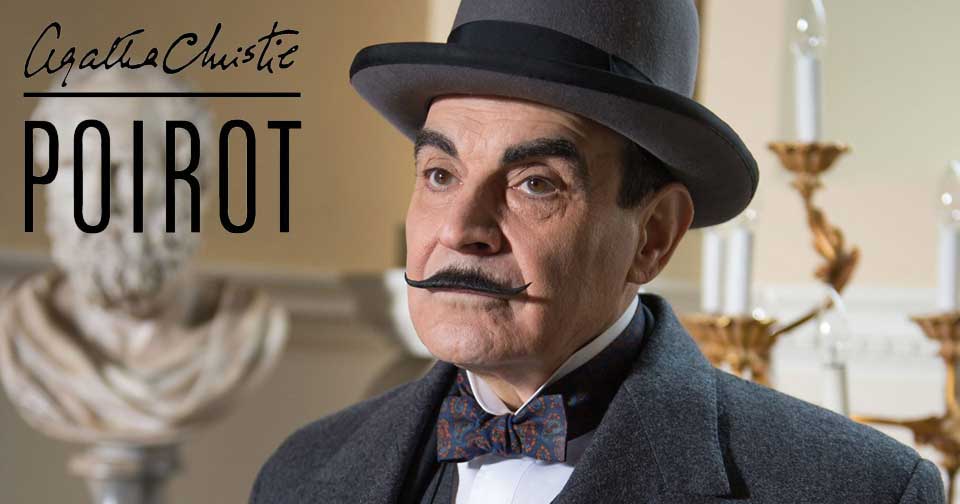
The first instalment I’d like to talk about is Agatha Christie’s Poirot, with David Suchet playing the title role , first broadcast in 1988. From the soundtrack to the actual storylines, everything is iconic in this production. David Suchet, with his fake accent and endearing moustache, is the living embodiment of Agatha Christie’s works. The series adapts the canonic novels and short stories written by the English author to the TV screen, with such elegance and cheesiness that it’s hard to miss. The writing is brilliant and stays as loyal as possible to the original material. The actors blend in the 1930s Art Déco setting with ease, and David Suchet went as far as to make his all of the famous Belgian detective’s quirks, from his impeccable sense of style to the number of sugars he takes with his tea. More importantly, Poirot doesn’t overuse the same old tropes over and over again. Sure, Hercule Poirot becomes predictable with time (as would any recurring character), but he instils a charming eccentricity in the work of private detective. He is distant, seemingly harmless, and always has a witty thing to say. And this series gives off a sense of comfort and warmth, at least to me. It reminds me of rainy afternoons stuck at home with nowhere to go, only gallons of tea to drink. And there’s always a channel somewhere that might overindulge in its broadcast. Eventually, Agatha Christie’s Poirot is a well-rounded adaptation of the English author’s work, and is a strong ally, in the face of boredom and prolonged monotony.
Midsomer Murders, the good, the bad and the ugly
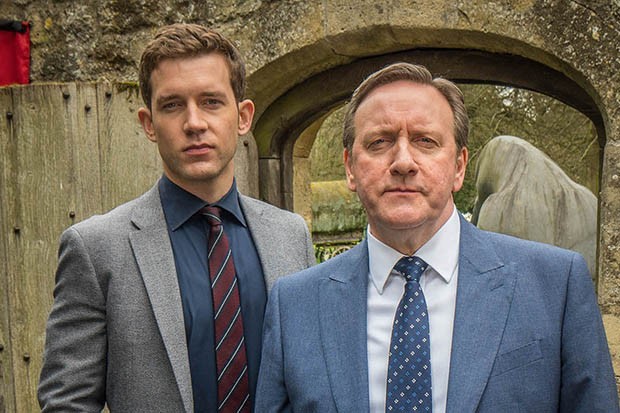
Another staple of British inspectors is DCI Barnaby, from Midsomer Murders, that premiered in 1997. This program follows the deadly encounters of the people of Midsomer, a fictitious county in a quintessential England. Now, if Midsomer existed, it would need to be investigated more seriously. Everyone there, instead of settling conflicts in an orderly and peaceful way, immediately resorts to murder, and not always simple and effective ones. The deaths in Midsomer Murders are always dramatically staged; for example, beekeepers die smothered in wax, or cheesemakers get flattened by, well, wheels of cheese, there’s always a kind of humorous twist to the murders (as much as possible, given the context, anyways). Midsomer Murders, much like Poirot, has its recognisable features, including its opening soundtrack and whimsical undertones. It doesn’t take itself too seriously, and as a result can sometimes push it too far, making it a little bit hard to watch. Its tongue-in-cheekiness is flaunted for everyone to see, however it can become tiring, or just a tad excessive, in some cases. But overall, Midsomer Murders is a great way to pass time, and a highly distracting program.
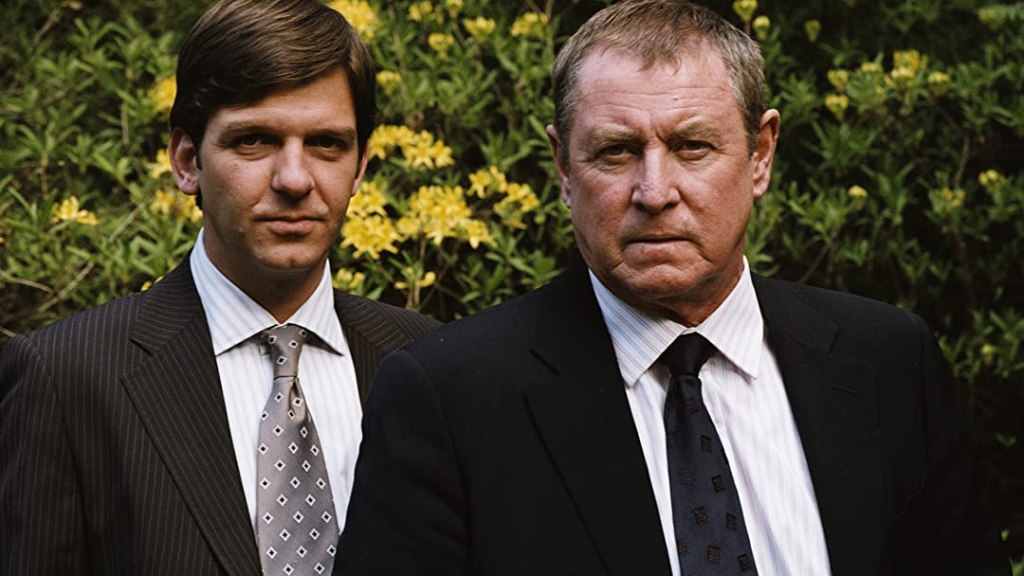
There is, however, something that bothers me quite a lot with this series. There are two DCI Barnabies that take turns in investigating the fictitious county : Tom Barnaby, the original one, played by John Nettles, and John Barnaby, his younger cousin that replaces him when he retires (what are the odds of that happening ?), interpreted by Neil Dudgeon. Now, call me old-fashioned if you wish, but Tom Barnaby is by far the best Barnaby out there. He’s got wit, gravitas, and, most importantly, he is a more fleshed-out character. John Nettles gives us an endearing portrayal of the cynical detective, and his enquiries aren’t just a repetition of the same tropes, over and over again. The same can’t be said of John Barnaby, his successor, who can sometimes feel a little lacklustre next to him. This second inspector’s writing isn’t always as precise, and can be a little bit artificial, as if everyone was resting on their laurels; moreover, Neil Dudgeon’s portrayal is kind of off at times. But maybe it’s me, maybe I’m nostalgic of a Barnaby I’ve barely known, but without Nettles, Midsomer Murders just seems a little less interesting.
Vera, the darker side of the Moon
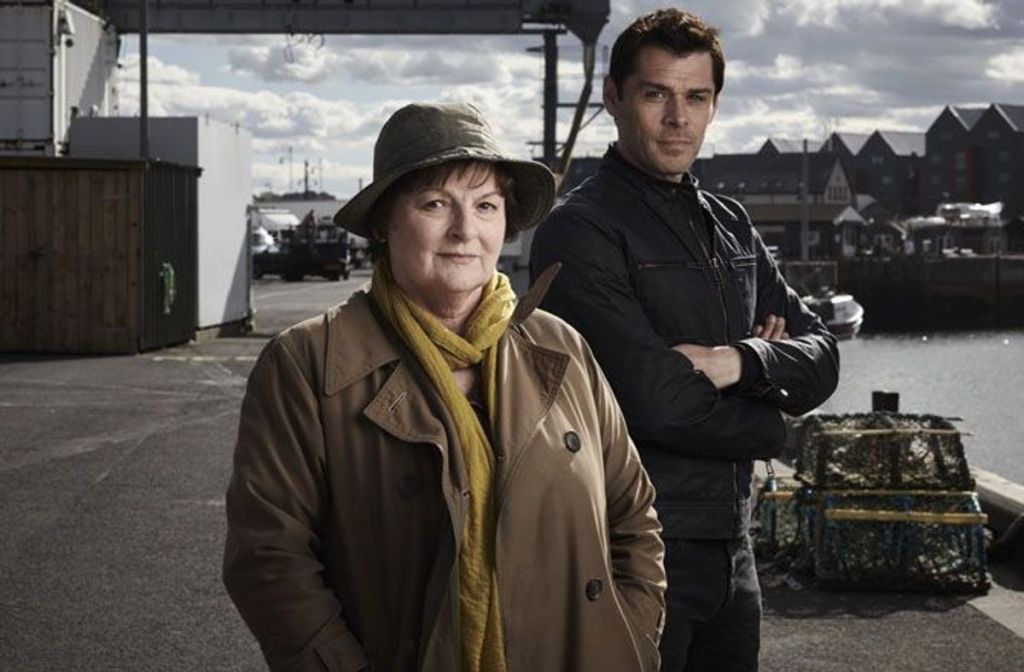
This leaves me with Vera, my personal favourite amongst British detectives (on TV, of course). This series is the most recent one out of the three, as it started in 2011. It follows DCI Vera Stanhope, a woman detective (for once, yay) played by Brenda Blethyn, nearly retired from the Northumberland and City police. Her cases are usually complicated and grim, with tough outcomes that are desperately and depressingly human. Vera has a near-realistic feel to it, and depicts an inspector that has her flaws, her drives and a history she cannot entirely control. She is sometimes dishevelled and rough, but, more importantly, driven by truth and justice, and by kindness. She cares deeply for her team and for the people she helps during her investigations. Vera is set against the backdrop of a rural Northern England, with its cuts and creases, shining a crude light on its murkier, violent areas. Vera herself is plagued by her own demons, always dancing on the verge of an unhealthy lifestyle (alcohol and insomnia don’t mix that well to be fair), and paces around dreary moors and windy, greyish beaches. But she is also sharp and vindicative, and exceptionally brilliant at what she does. Vera truly deserves a place amongst the greatest detectives of British TV. Her cases may be bleak, but she shows us what we would want to forget. Vera is not just entertainment, it is a gloomy witness of a flawed humanity. Yet the tough detective doesn’t let us wallow in this melancholic anguish; she also shows us warmth, and reminds us that empathy and vulnerability, throughout all of our darker faults, are what keeps us afloat. Nothing is ever as it seems.
All this to say that, of all the detectives on British TV, three have trapped both my attention and my affection. Poirot, as the quirky Belgian consultant, is a blueprint to the others, emerging from the works of Agatha Christie, with all of his strangeness and unconventional methods. Midsomer Murders, in its good and bad ways, gives me a taste of quintessential England : small cottages and outlandish, stereotypical characters that can’t wait to kill themselves DO mix, apparently. And finally, Vera, who, in my own opinion, goes above and beyond, and manages to encapsulate an experience that is both depressing and hopeful. And even though I am missing a lot of exceptionally good detectives too (honestly, I could probably compile an Encyclopaedia with my opinions on every single one of them), those three programs are strong contenders to chase away early night’s boredom. They are also an antidote that protects us from a depiction of the detective that I have come to resent, Sherlock Holmes being the prime culprit of it. I don’t care for the cliché arrogance and utter disregard for the human life that have become synonymous of private detectives and police inspectors. The three programs I mentioned her give a new and positive lease on this standoffish and, to be fair, inhuman characterisation that puts justice and any consideration for the human psyche last. An enquiry, as Poirot, Midsomer Murders and Vera show us, is not just a conundrum that begs to be resolved; it is the point where multiple lives and sufferings interlock, and an intricate and messy spool full of truths and lies, the climax of despair and distress.

 background character
Leave a comment